
What roof damage actually looks like
Every photo below came off a real San Diego County roof during one of our inspections. Most of this damage is invisible from the driveway — cracked tile hidden under lichen, flashing "repaired" with a bucket of tar, fascia quietly rotting behind the gutter. Use these as a reference before you climb a ladder or file a claim.
Nine findings we document most often
Photograph anything that looks like these examples from the ground and from a window if you can do it safely — dated photos are the single most useful thing you can hand an adjuster.
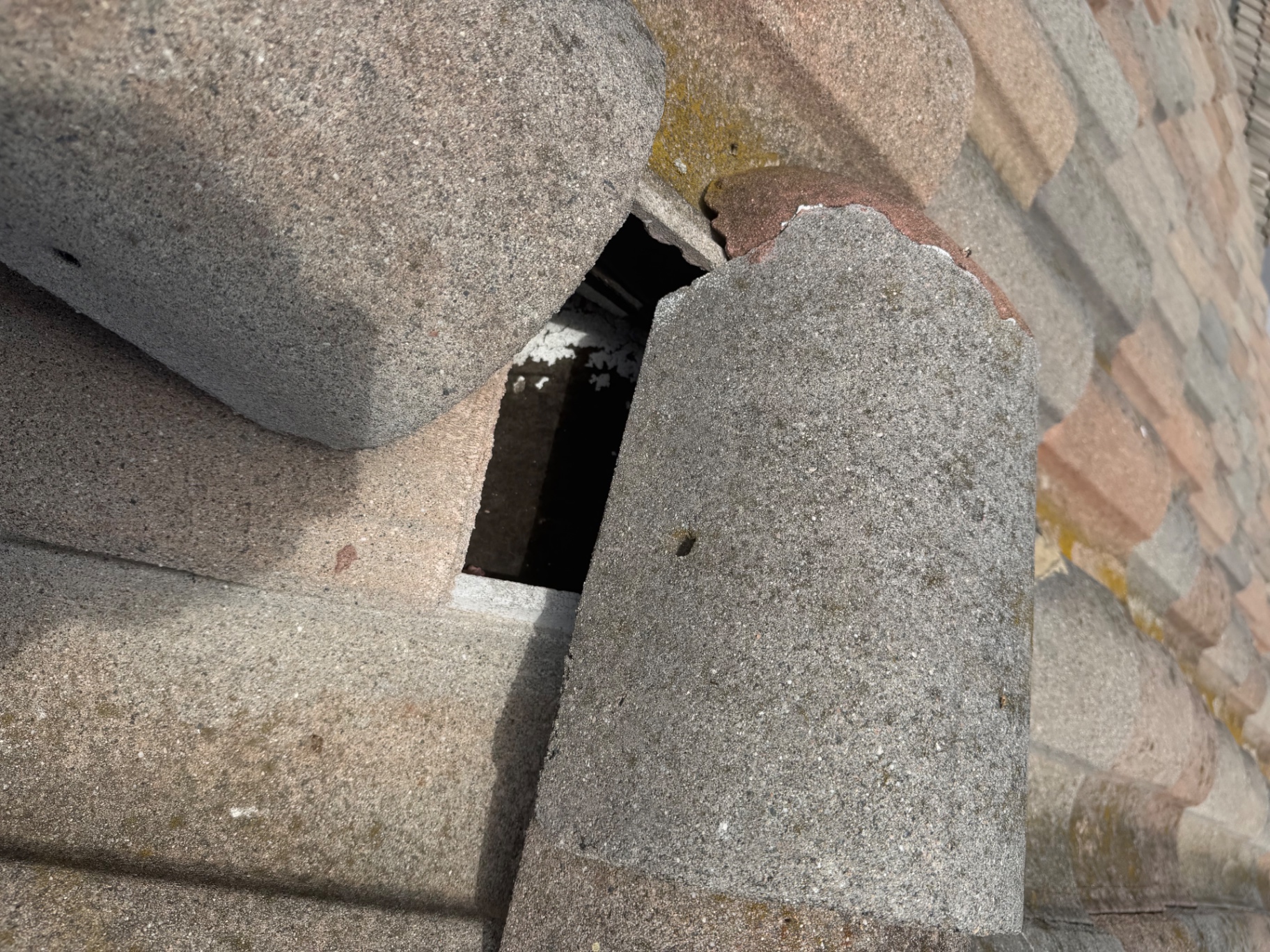
Broken tile with an open path to the deck
A snapped concrete tile and its slipped neighbour leave a hole straight through to the sheathing. Once daylight reaches the deck, the underlayment is the only thing left holding water out — and it is usually the next thing to fail.
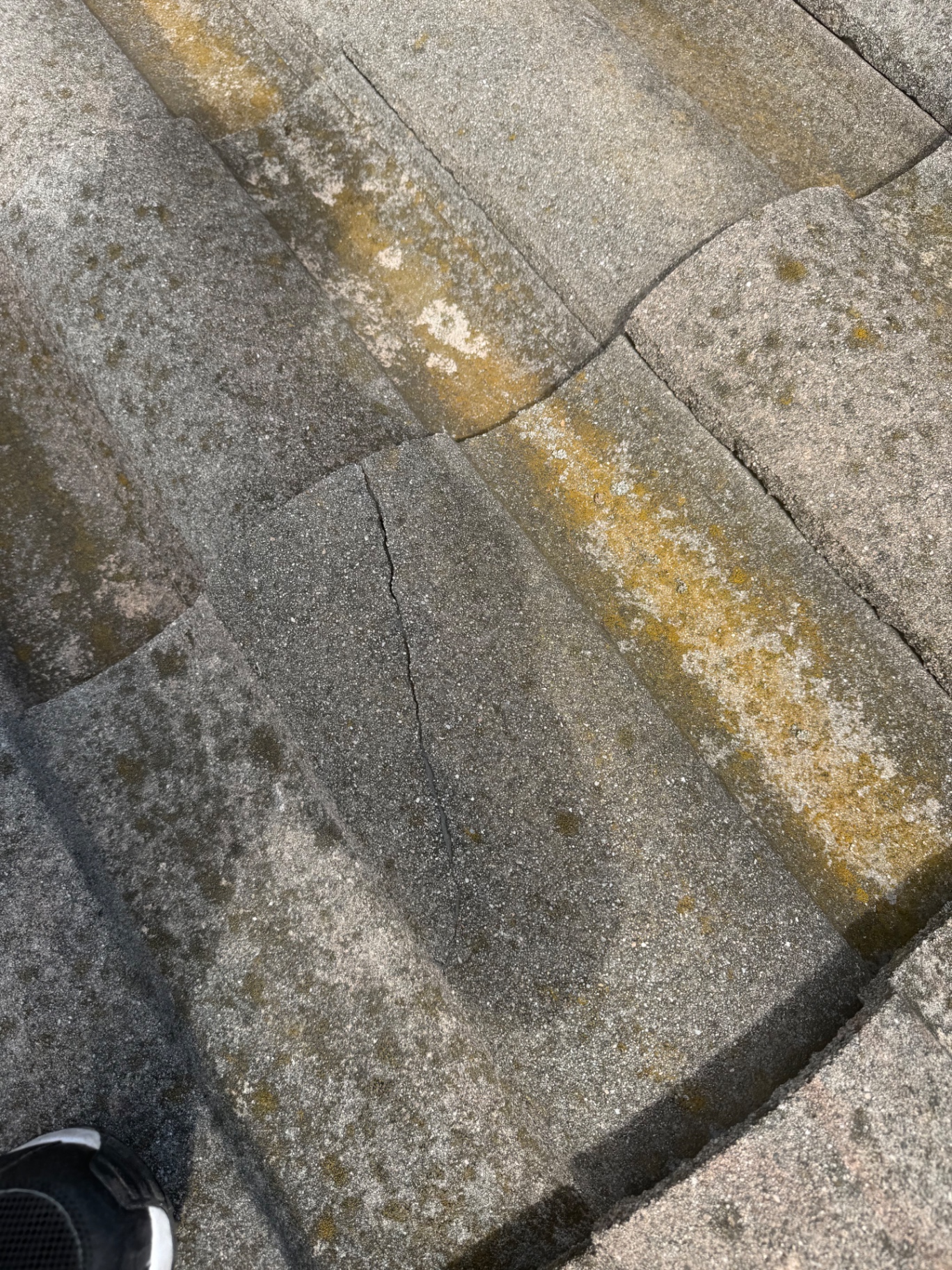
Hairline cracks hidden under moss and lichen
Two full-length cracks run down these tiles, camouflaged by lichen. Cracks like these come from foot traffic, impact, or age — they wick water into the batten cavity every time it rains and are easy to miss from the ground.
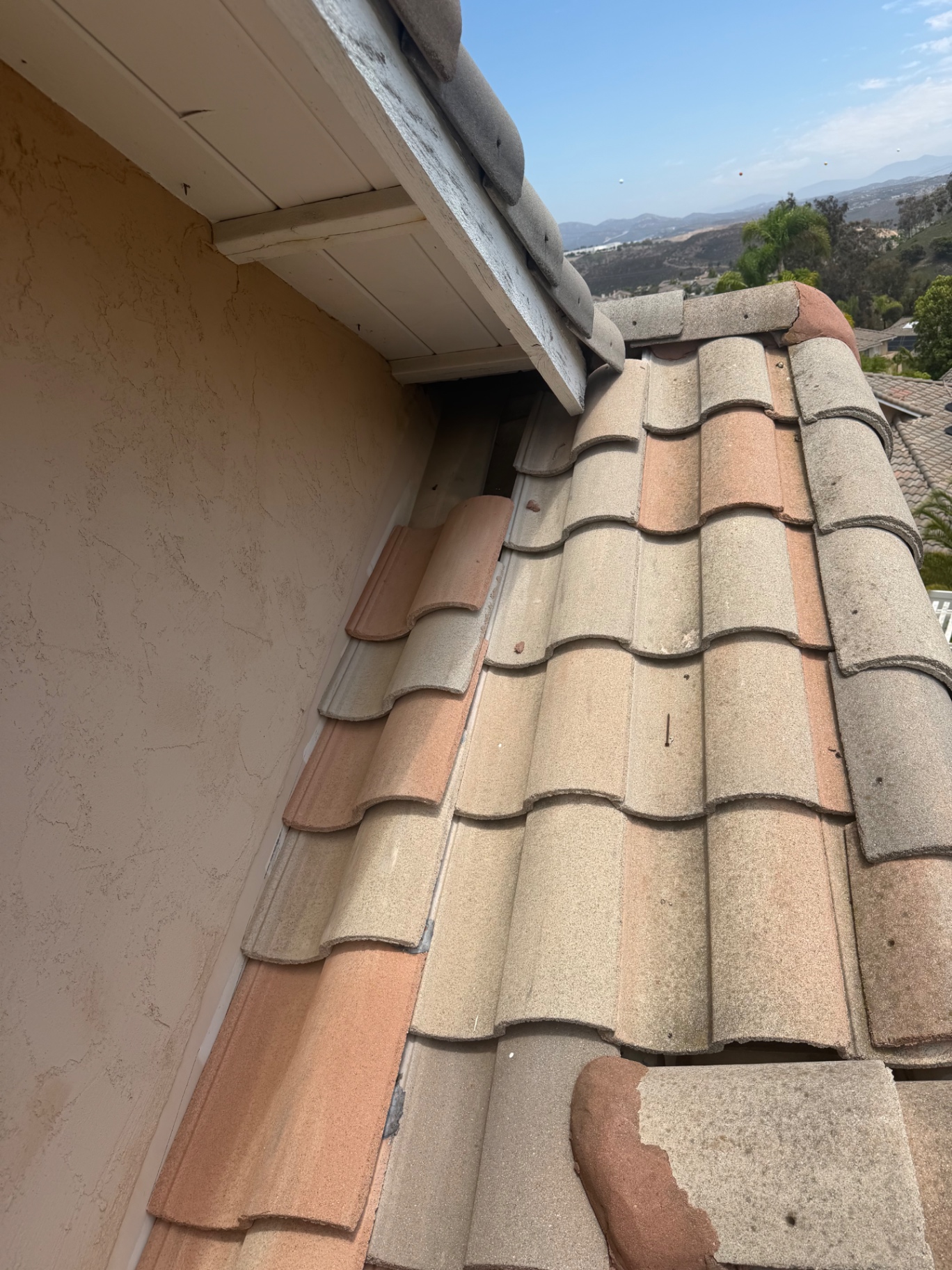
Displaced tiles at the rake edge
The rake course has shifted and the trim board has pulled away, opening the batten cavity at the edge of the roof. Wind-driven rain enters here first, and it is one of the most common Santa Ana wind findings we document.
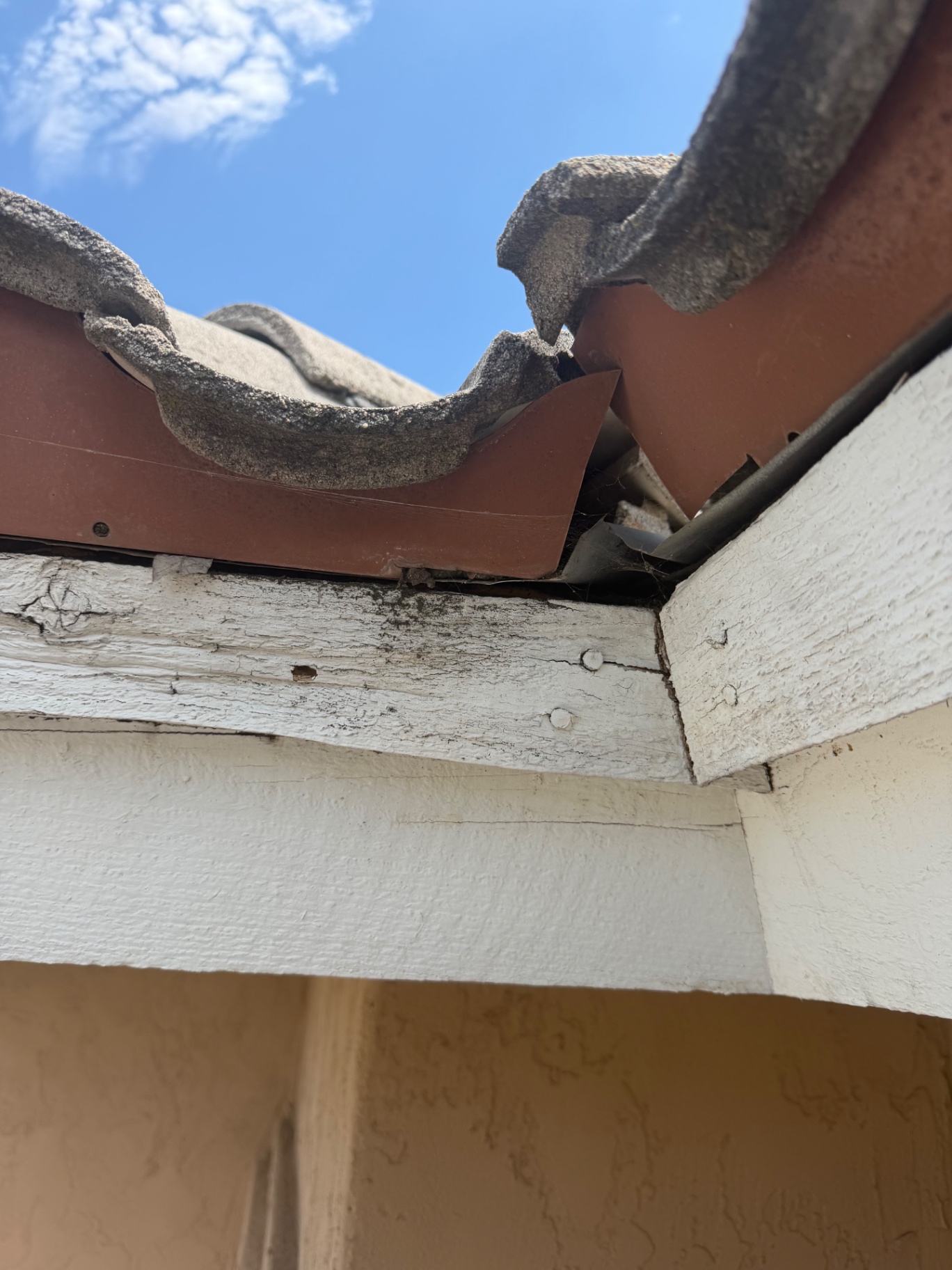
Crushed eave tile and rotting fascia
The eave tile is shattered and the fascia underneath has gone soft and dark — water has been running behind the drip edge for a while. Gaps like this also let rodents and birds into the attic.
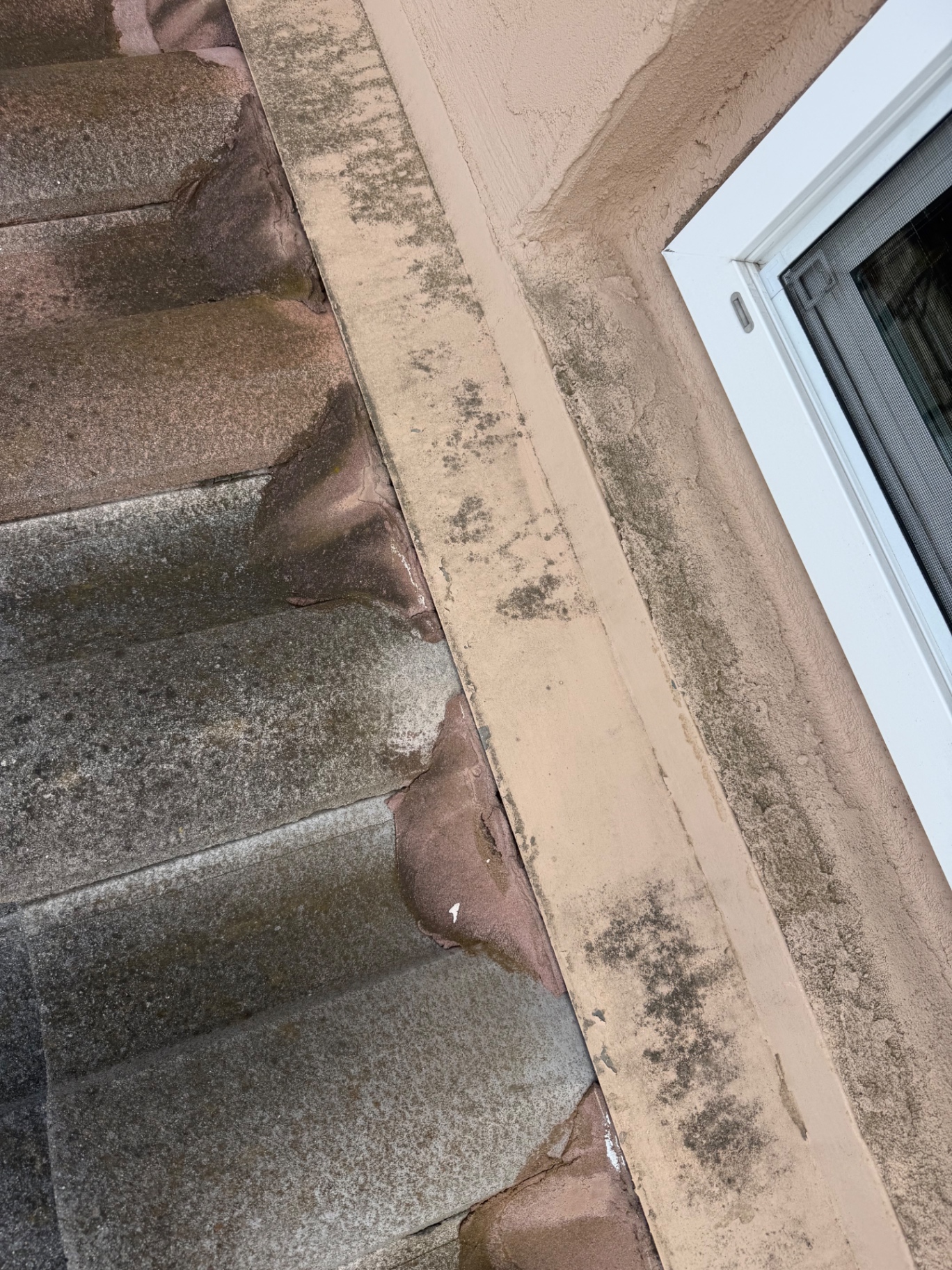
Failed roof-to-wall termination
Where the tile field meets the stucco wall, the mortar and paint have failed and the wall is streaked with mold. This is a flashing problem, not a paint problem — sealing the outside only traps the moisture inside the assembly.
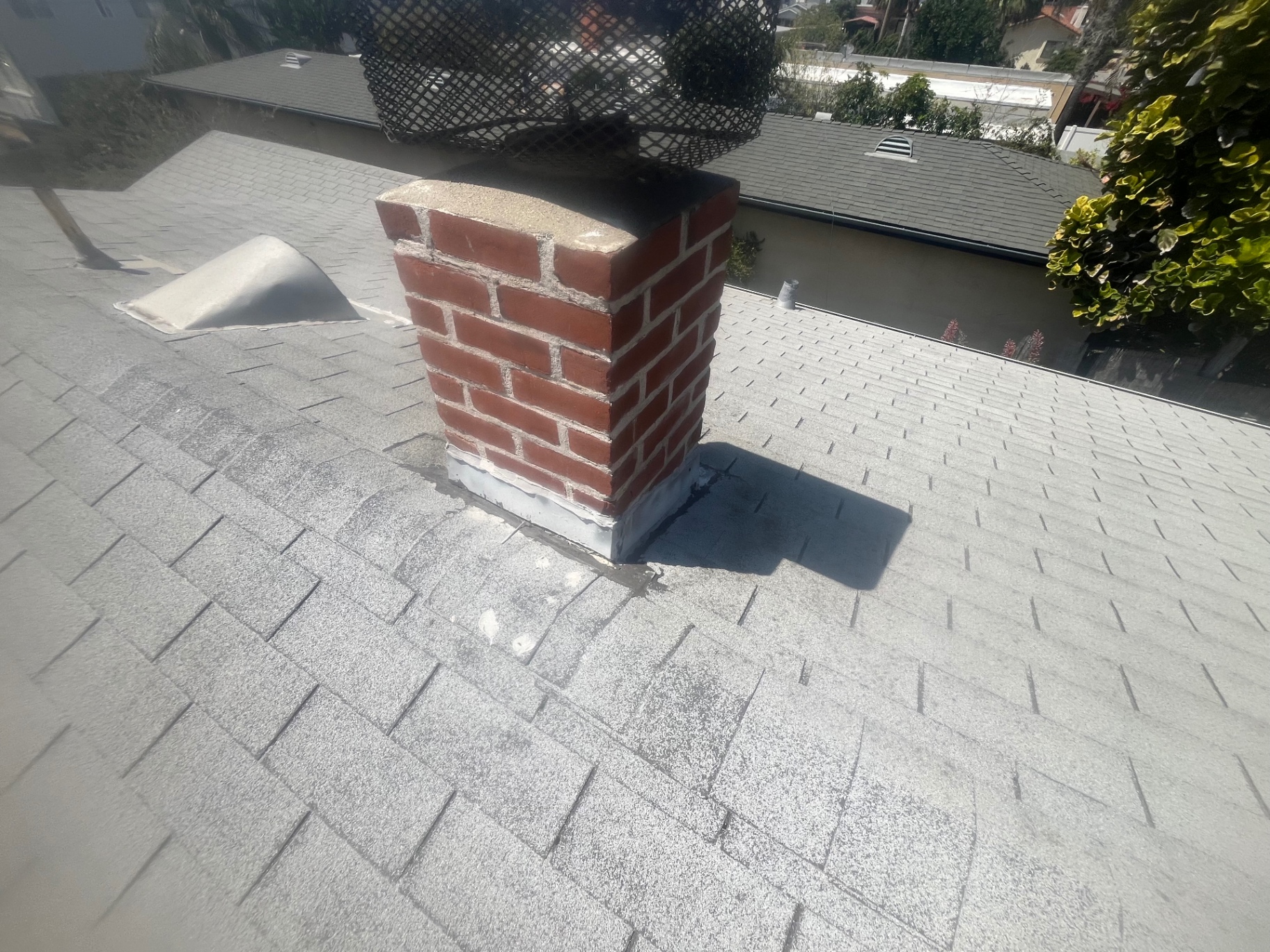
Chimney flashing patched with mastic
Instead of counter-flashing cut into the brick, someone smeared sealant around the chimney base. Mastic shrinks and cracks in San Diego sun within a couple of seasons, so the leak always comes back.
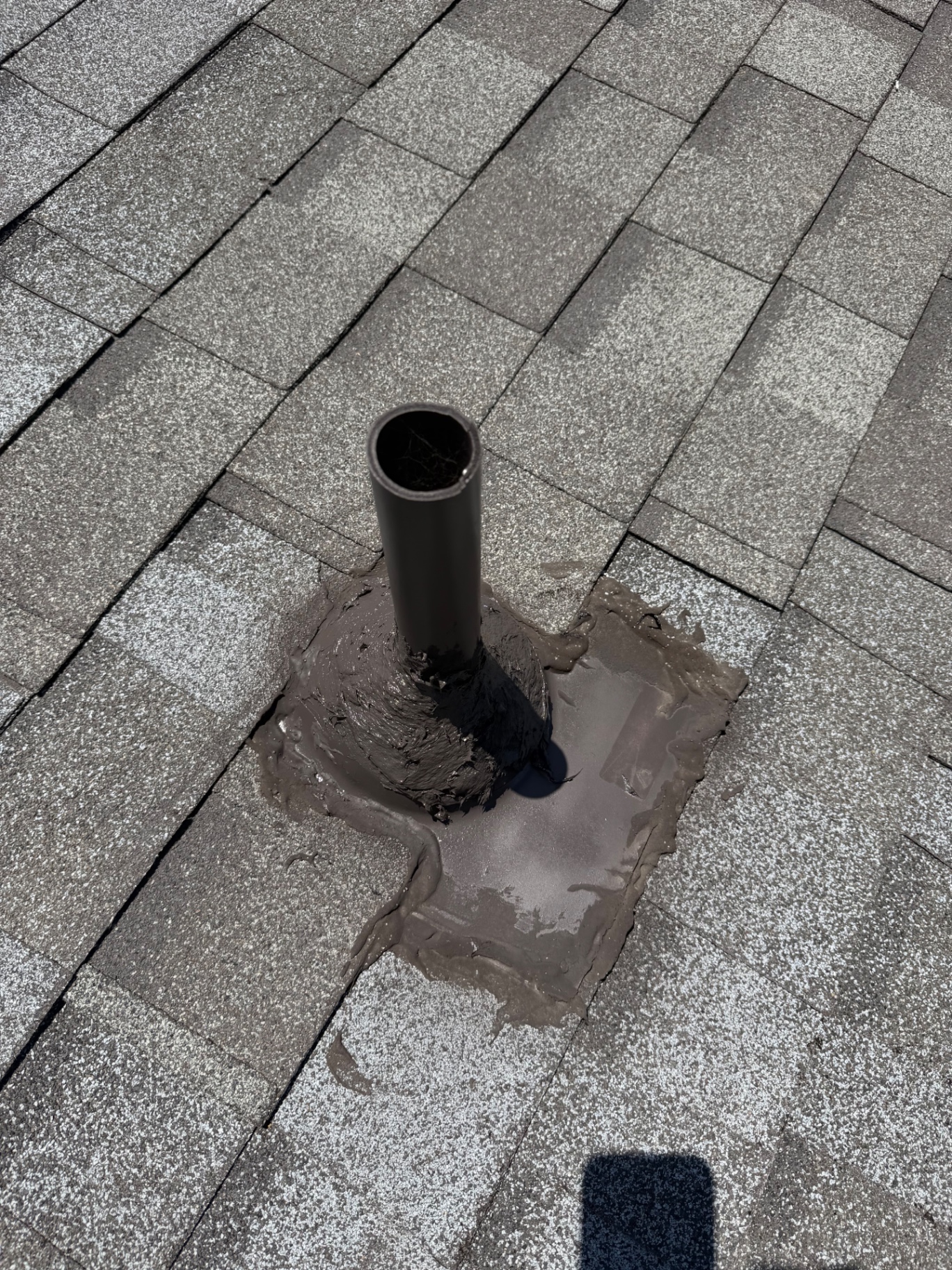
Vent pipe 'sealed' with a bucket of tar
A plumbing vent should get a new metal boot woven into the shingle courses. This one got troweled tar over the old flashing — a classic sign of a quick repair that will need to be redone properly.
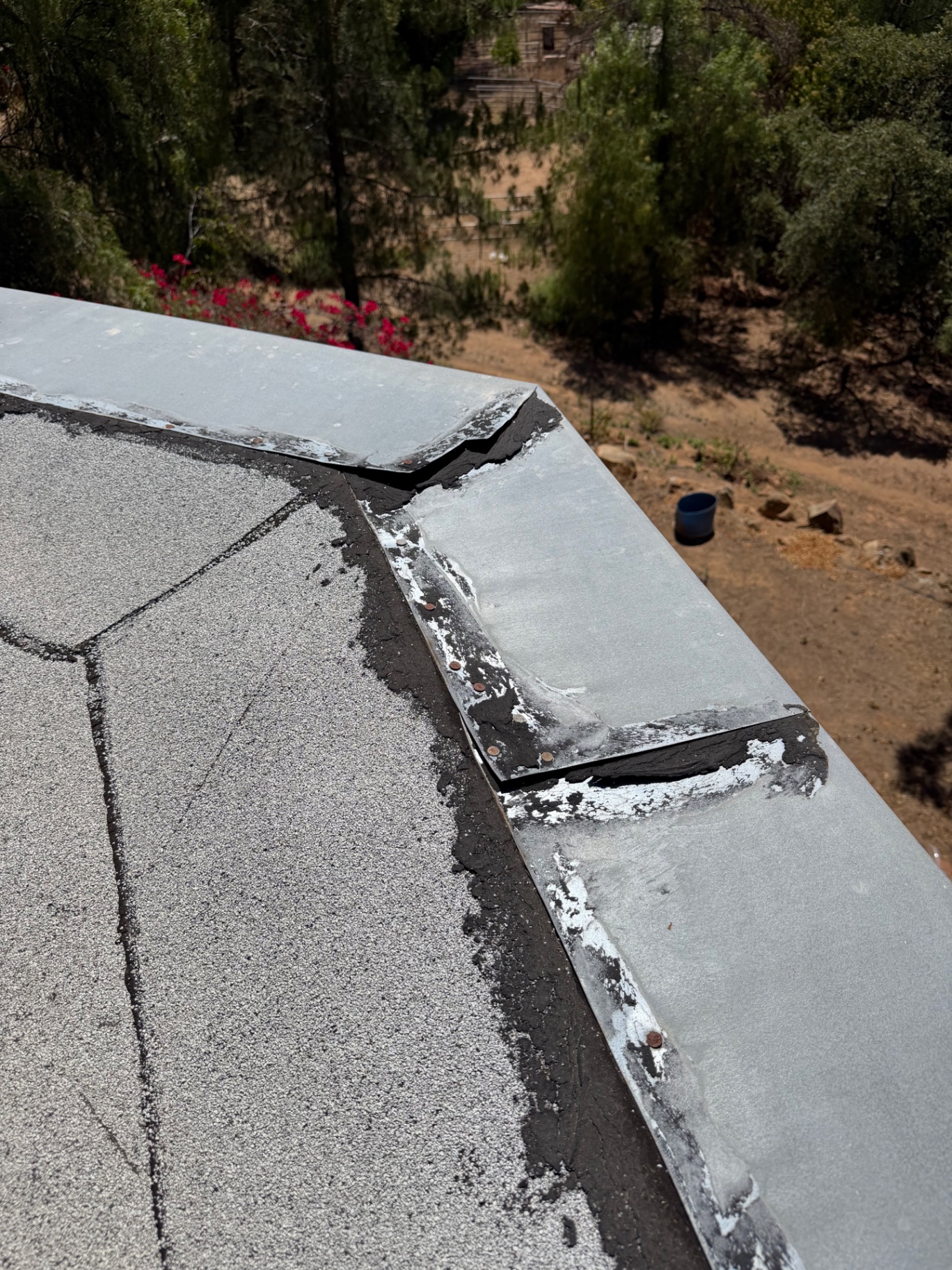
Open edge-metal seam on a flat roof
The edge metal joints have separated, the nails are exposed, and the repair is a smear of tar. Perimeter details are where low-slope roofs leak first, because every gallon of runoff crosses them.
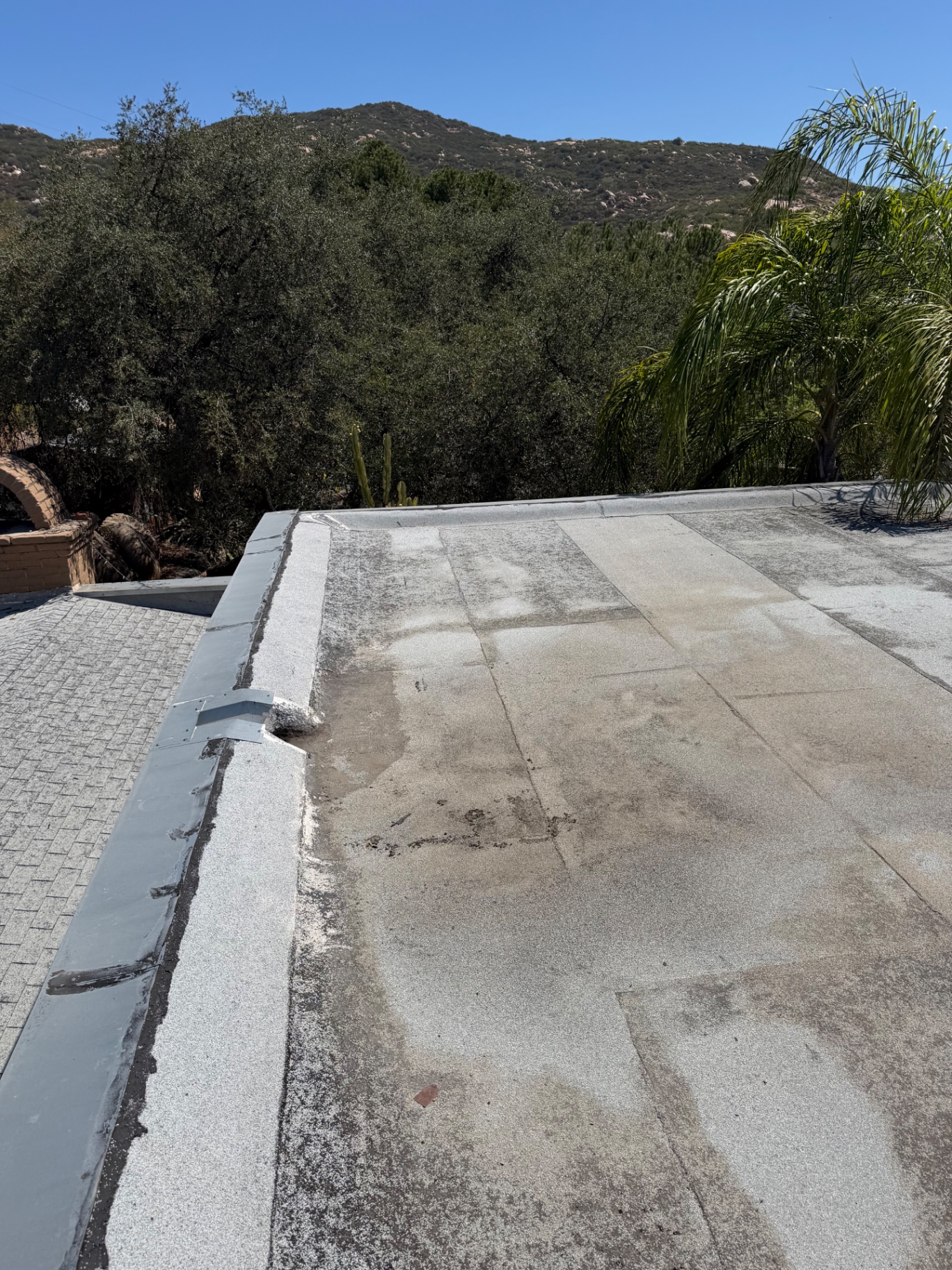
Ponding stains on an aging cap sheet
The dark map on this cap sheet is where water sits after every storm instead of draining to the scupper. Granule loss plus ponding means the membrane is near the end of its service life.
Turning photos into a paid claim
- Shoot wide first, then close — an adjuster needs to see where on the roof each finding is.
- Keep the original files with their dates; do not crop out timestamps or metadata.
- Photograph the interior stains and wet insulation too, not just the roof surface.
- Never let anyone seal over damage before it has been documented and estimated.
Working through a claim right now? Use the interactive checklists: storm damage · wind damage · hail damage
Storm season is when roof damage problems show up first. If wind, rain, or hail hit your San Diego roof, start here:
- Storm Damage Roof Repair in San DiegoAtmospheric-river leaks, lifted underlayment, and insurance-claim documentation handled end to end.See storm repair options
- Wind Damage Roof Repair in San DiegoSanta Ana wind events, broken seal strips, displaced tile, and torn ridge caps repaired fast.See storm repair options
- Hail Damage Roof Repair in San DiegoBruised shingles, fractured tile, and dented metal documented for adjusters with photo evidence.See storm repair options
Not sure what you are looking at?
Send us your photos or let us get on the roof. You get drone and close-up documentation, a line-item estimate, and a straight answer on repair versus replacement — at no cost.
(424) 777-1619Free • No Obligation
Get Your San Diego Estimate
Sent directly to sales@californiafirstroofing.com — response within 15 minutes during business hours.