
The homeowner's concern
The homeowner called after a second ceiling stain appeared in a different room than the first — one over the dining room, one at a hallway wall. Two prior contractors had patched tile and applied mastic to the valley, and both stains returned with the next driven rain.
What the inspection found
- Original 30 lb organic felt underlayment, brittle and cracked at every batten fastener
- Both valley metals rusted through at the low end and previously coated in mastic
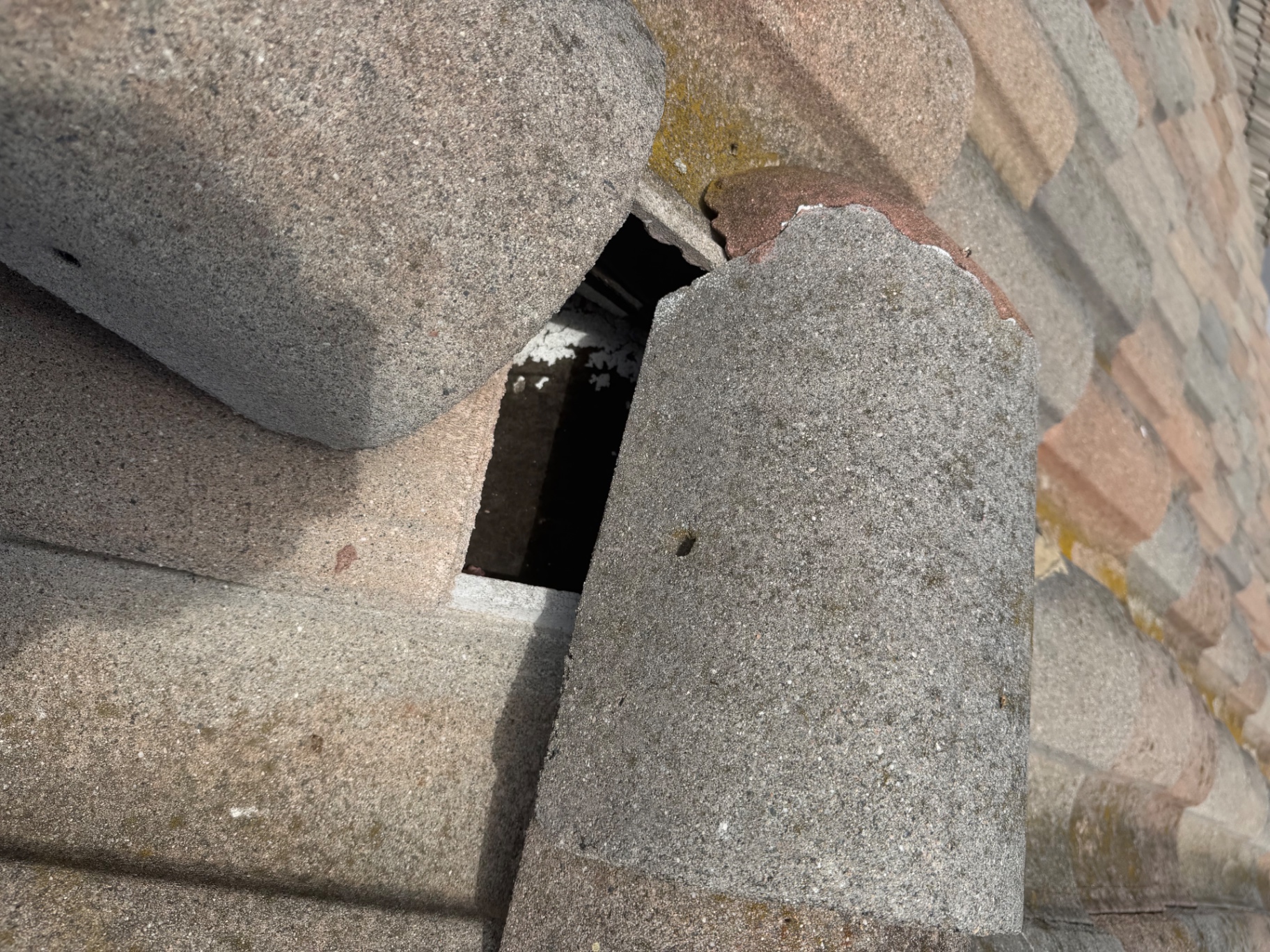
- Rotted 1x2 battens on the north slope causing tile slippage at the third course
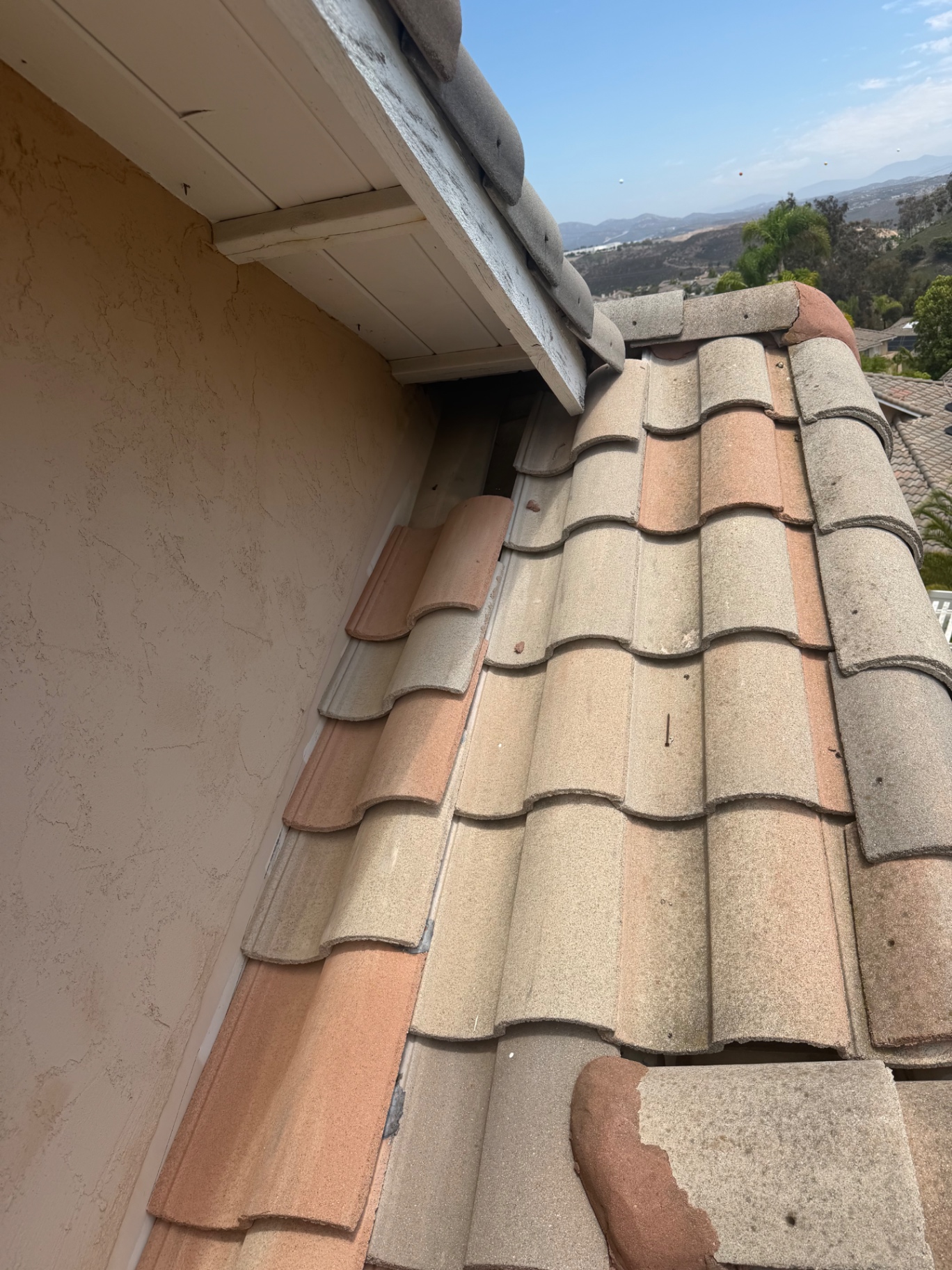
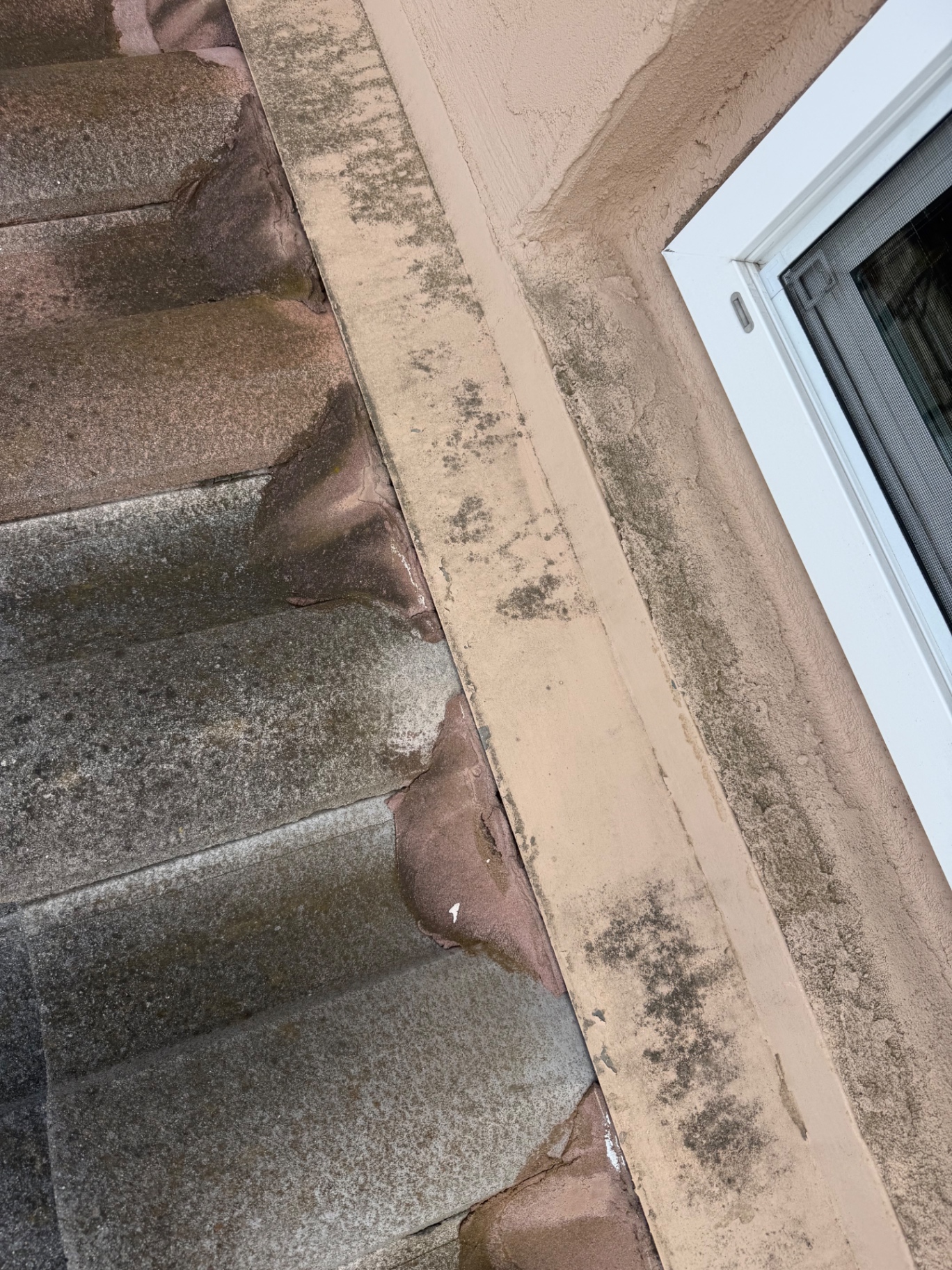
- Wall termination at the hallway had no counterflashing — stucco was cut and mastic-filled
- Tile itself in good condition with no widespread cracking
Scope of work performed
- 1Full lift and relay: tile stacked on the roof by elevation and staged for reuse
- 2Complete tear-off of organic felt underlayment across all elevations
- 3Replaced 11 sheets of damaged plywood sheathing at the north slope eave
- 4New SBS peel-and-stick underlayment over the full field
- 5New pressure-treated battens throughout, new valley metals, new pipe and wall flashings with counterflashing let into the stucco
- 6Original tile relaid in the same layout; ridge and hip reset on foam adhesive
Materials specified
Polyglass Polystick SBS peel-and-stick high-temperature underlayment
26-gauge painted W-valley metal
Pressure-treated 1x2 battens, stainless fasteners
Original Eagle concrete S-tile, with color-matched replacements for breakage
Project photos
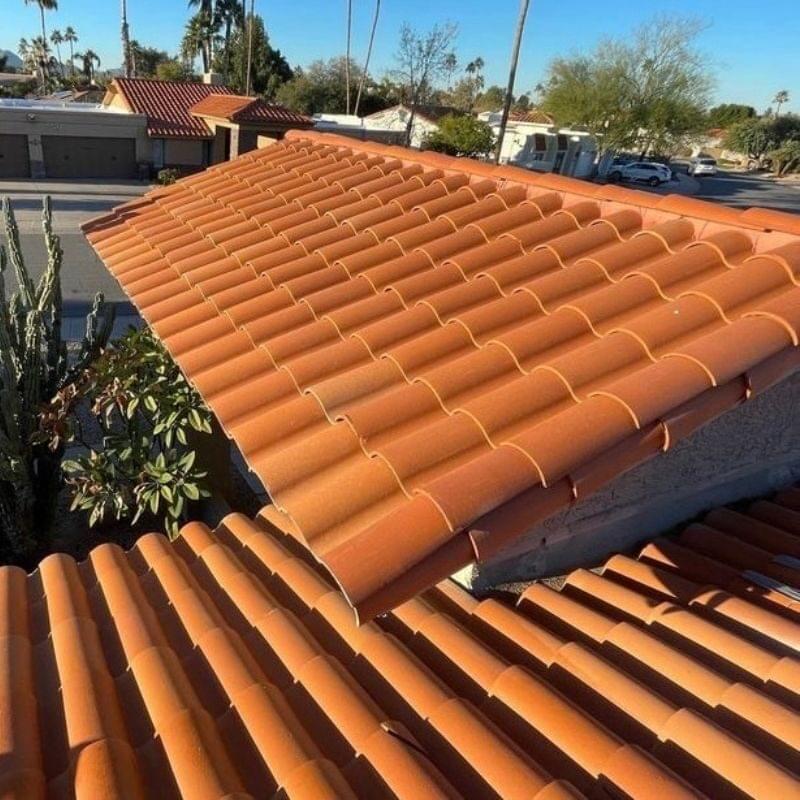
All photos on this page were taken by our crew on this job in San Diego County.
Outcome
The roof now carries a new 30-year underlayment system beneath tile that still has decades of service life, at roughly 60% of what full tile replacement would have cost. Both stain locations were dry through the following winter, and the homeowner received a written workmanship warranty covering the underlayment and every flashing detail.