
The homeowner's concern
The property manager reported two tenant leaks near rooftop HVAC units and standing water that remained on the roof more than two days after rain. The board wanted to know whether the roof could be coated or had to be replaced.
What the inspection found
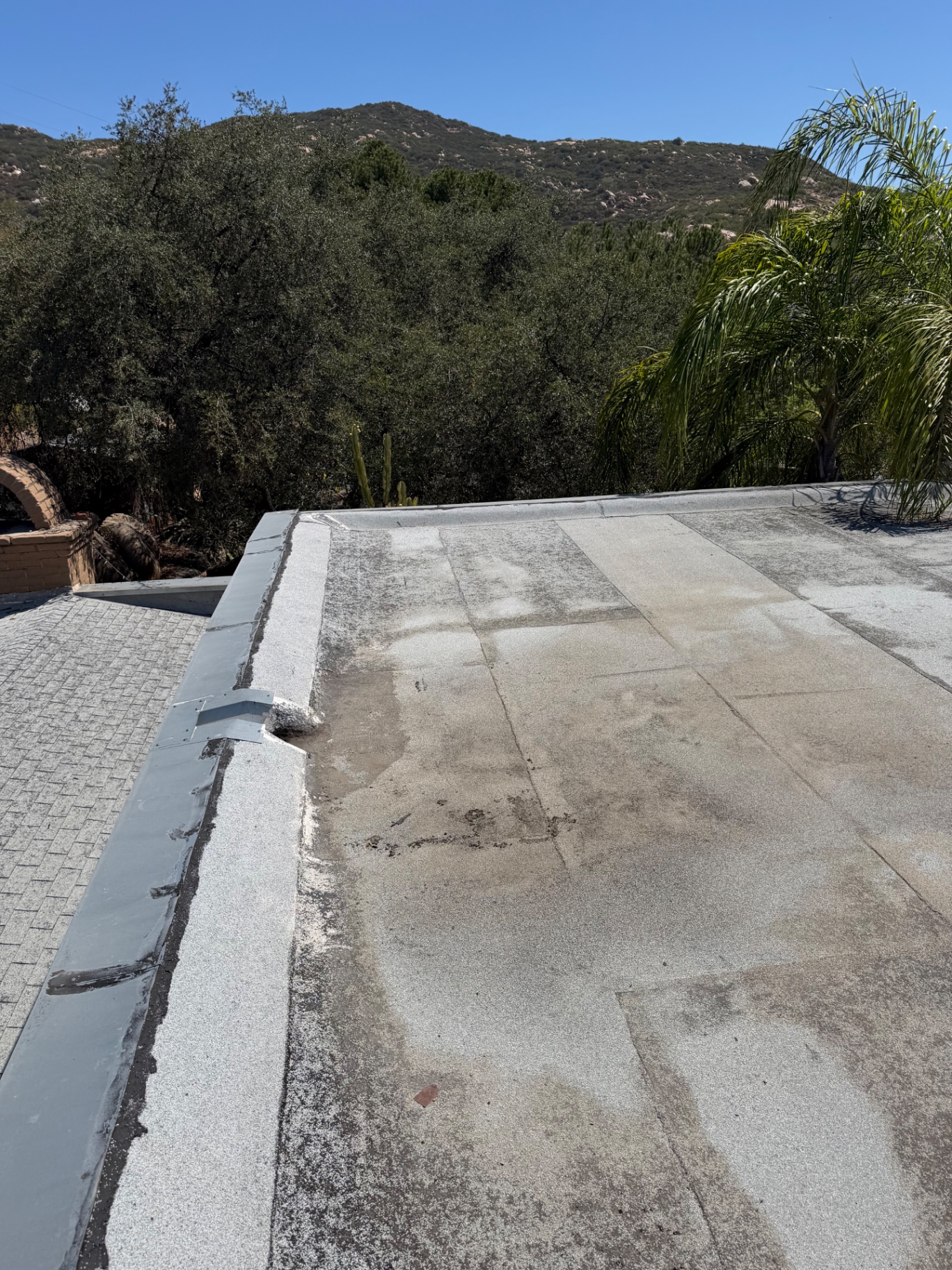
- Ponding water in two low areas around the HVAC curbs — approximately 900 sq ft affected
- Split laps and open seams at three cap-sheet transitions
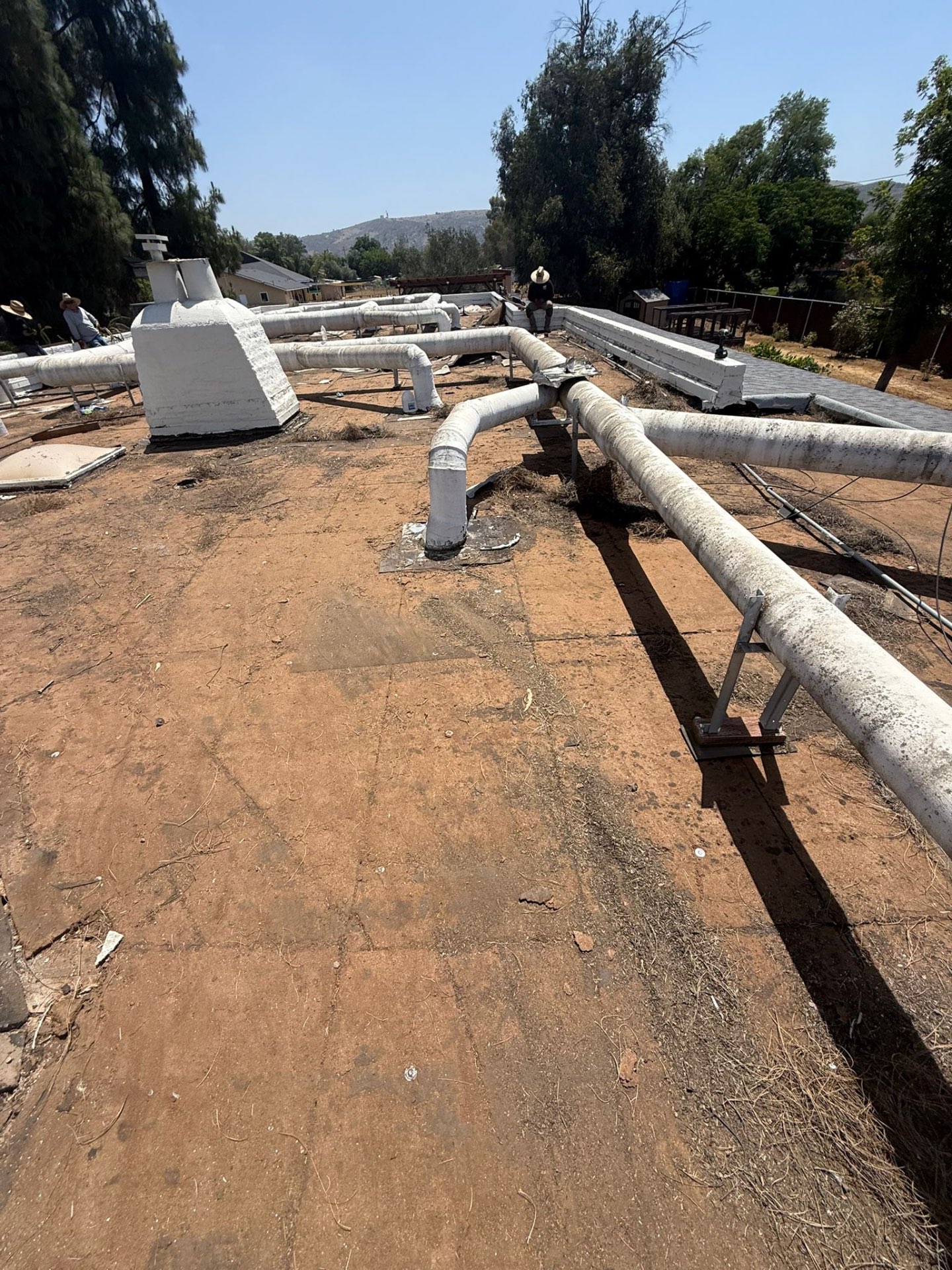
- Pitch pockets around conduit penetrations dried out and cracked
- Two roof drains partially blocked with debris and set above the surrounding surface
- Core cuts confirmed the insulation was dry outside the two ponding areas — coating was viable after targeted repair
Scope of work performed
- 1Power-washed and prepped the full roof surface
- 2Cut out and replaced saturated insulation and cap sheet in the two ponding areas
- 3Installed tapered ISO insulation crickets to move water toward the drains
- 4Cleared and reset both roof drains with new clamping rings and strainers
- 5Rebuilt pitch pockets, reflashed HVAC curbs, and heat-detailed all open laps
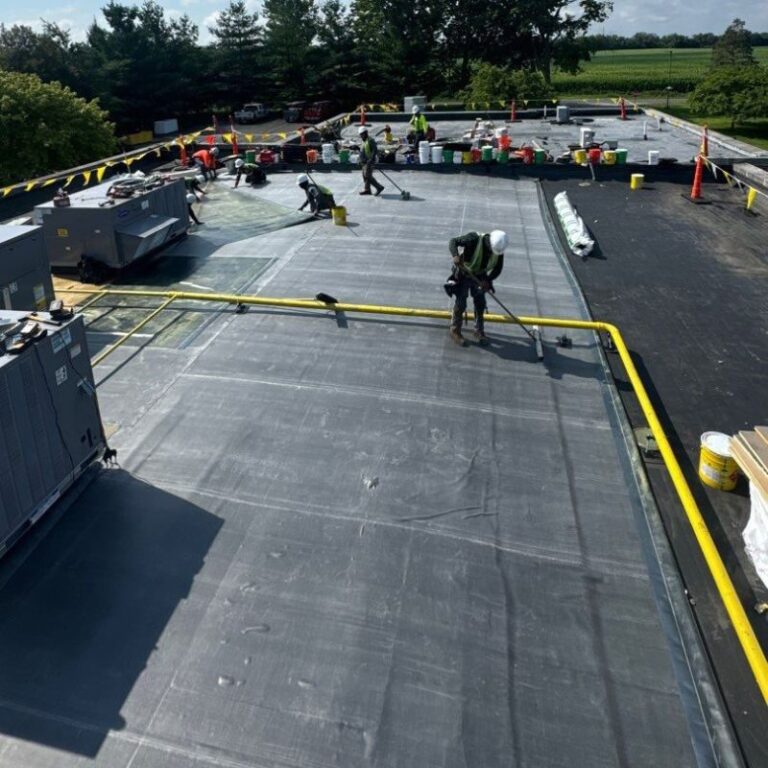
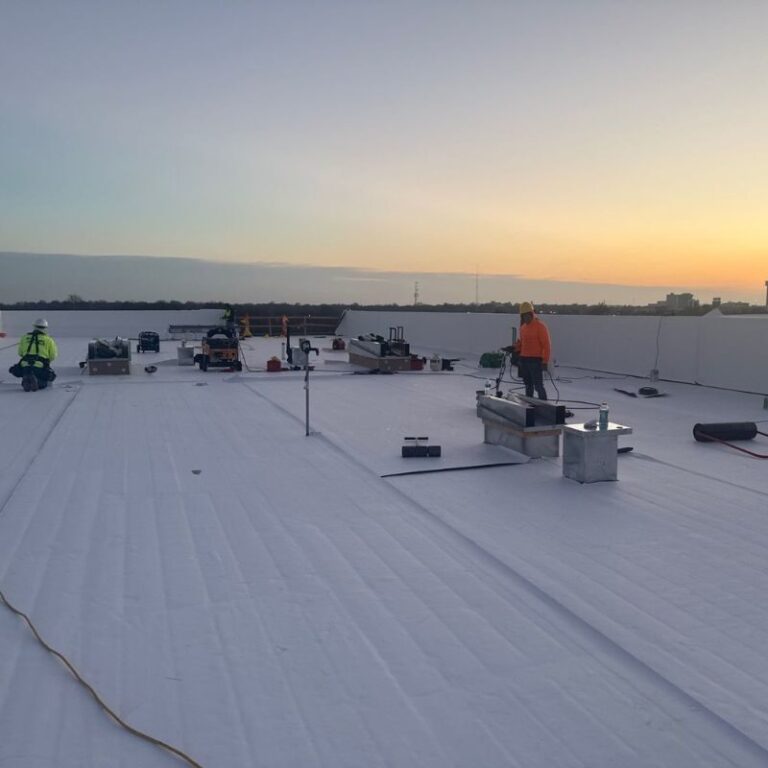
- 6Applied a two-coat high-solids silicone system at specified mil thickness with reinforced seam detailing
Materials specified
High-solids silicone roof coating system, two-coat application with polyester seam reinforcement
Tapered ISO insulation crickets
Modified bitumen cap sheet for the replaced sections
New cast drain clamping rings and strainers
Project photos
All photos on this page were taken by our crew on this job in San Diego County.
Outcome
Both tenant leaks stopped, standing water cleared within hours of rain rather than sitting for days, and the coating system carries a manufacturer warranty. The building avoided a full tear-off, and the reflective surface lowered rooftop temperature and HVAC load through the summer.