
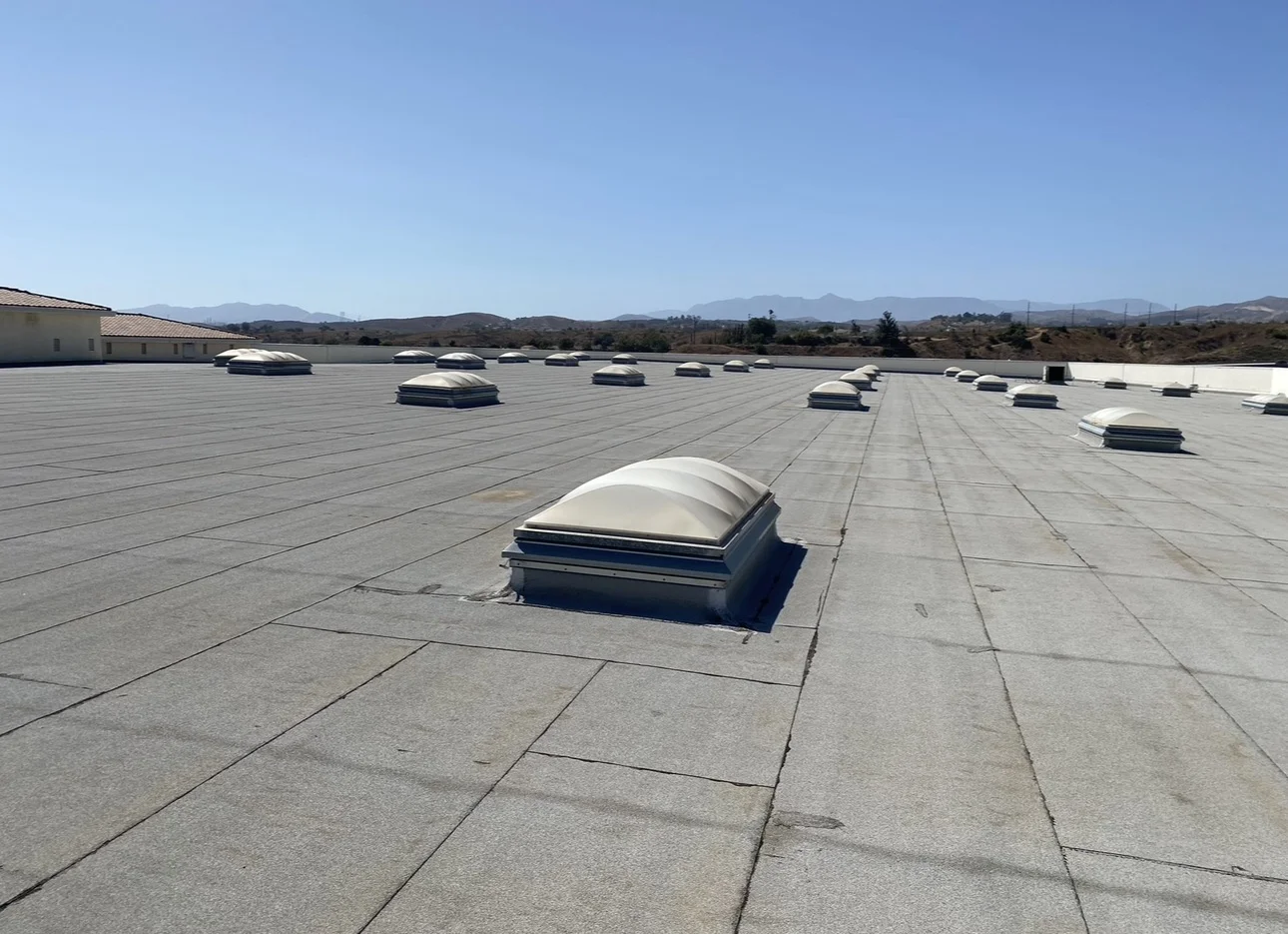
San Diego Commercial Roofs: A Drainage Checklist Before Replacement
Before comparing replacement membranes for a commercial low-slope roof, document how water leaves the existing roof. A new surface should not be assumed to resolve blocked outlets, unsuitable slopes or poorly detailed equipment penetrations. Ask a qualified roofing professional to assess the assembly and drainage together.
Start with records and safely observed symptoms
Share the existing roof type, past repairs, available plans, recurring leak locations and photos taken from safe accessible areas. Note where water remains after rain and when it clears, without treating those observations as a structural diagnosis. Do not climb onto the roof or enter an area with sagging ceilings or electrical hazards.
Ask what the inspection includes
- Condition and accessibility of drains, scuppers and gutters.
- Roof-to-wall transitions, parapets and perimeter details.
- Equipment curbs, pipe penetrations and previous patches.
- Existing covering, substrate condition and evidence of moisture.
- Whether any proposed drainage or structural changes need design and approval.
A real San Diego County project example
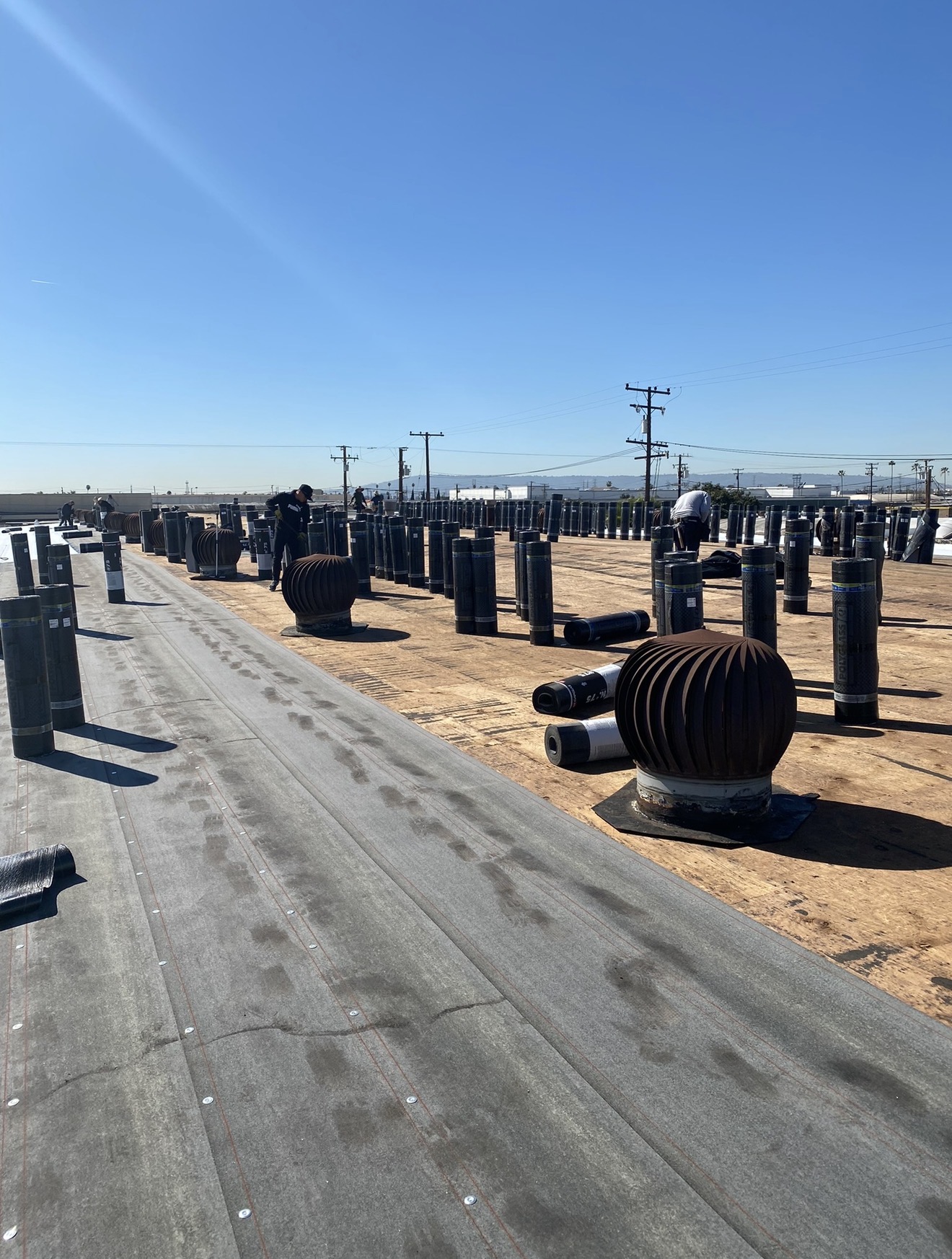
The appropriate assembly depends on the inspected roof and specification. Modified bitumen and TPO describe different systems; proposals should identify which is offered, what preparation is included and how transitions will be completed. Ask for inspection evidence rather than selecting a membrane on name alone.
Compare equivalent replacement scopes
Check whether each bid includes tear-off or an assessed recover option, concealed damage handling, drainage work, equipment coordination, disposal and warranty responsibilities. Request a written explanation for anything excluded and how additional work is authorized. See our shared roofing services pricing guide for context; an actual commercial price requires a site-specific scope.
Check commercial approvals separately
The property address determines the permitting authority: an unincorporated San Diego County property follows County rules, not the nearby city's rules. HOA architectural approval is separate and applies only when your association requires it. Coastal, historic and wildfire-area restrictions are checked where applicable; a roof replacement does not automatically require a coastal permit.
Permit applications submitted on or after January 1, 2026 are subject to the 2025 California codes as adopted and amended locally. Roof replacement must meet applicable roofing, structural and fire-safety rules even when a permit exemption applies. Title 24 energy requirements, including cool-roof requirements and exceptions, depend on the building type, climate zone, roof slope and scope of work—not every reroof requires a cool roof. We check the requirements for your address before selecting the roof assembly.
Use shared permit guidance and official sources and confirm the commercial scope with the building department. A residential reroof permit pathway does not establish commercial approval requirements.
Explore commercial flat-roof services or Escondido roof replacement. To compare an inspected scope, request a free roof quote.
Related guides for San Diego
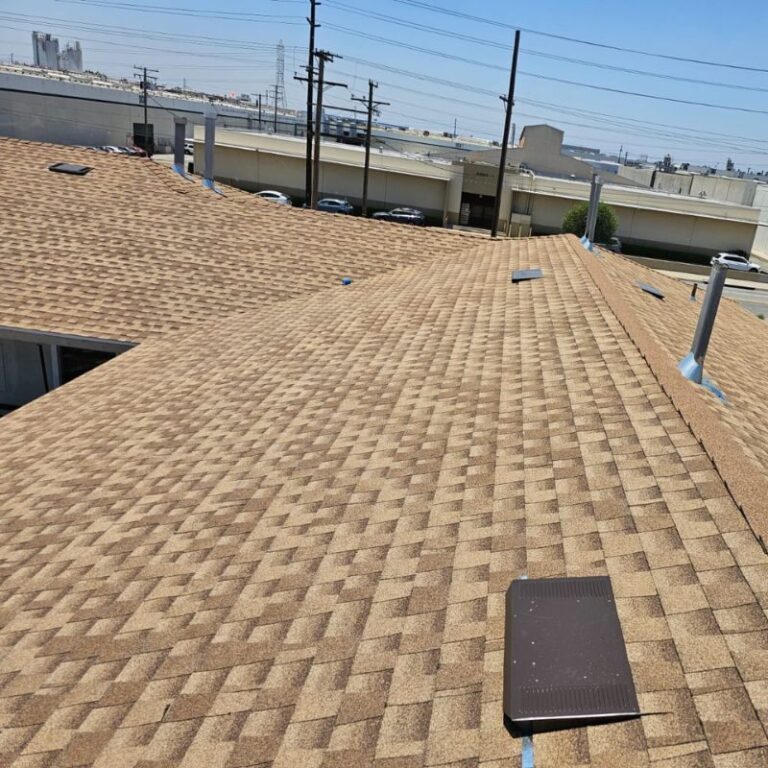
How Roofers Show Up on Google: Citations, Reviews and City Pages
The three signals behind local roofing results in San Diego — citations, reviews and city pages — and how to use them to judge any roofer you are comparing.
Read article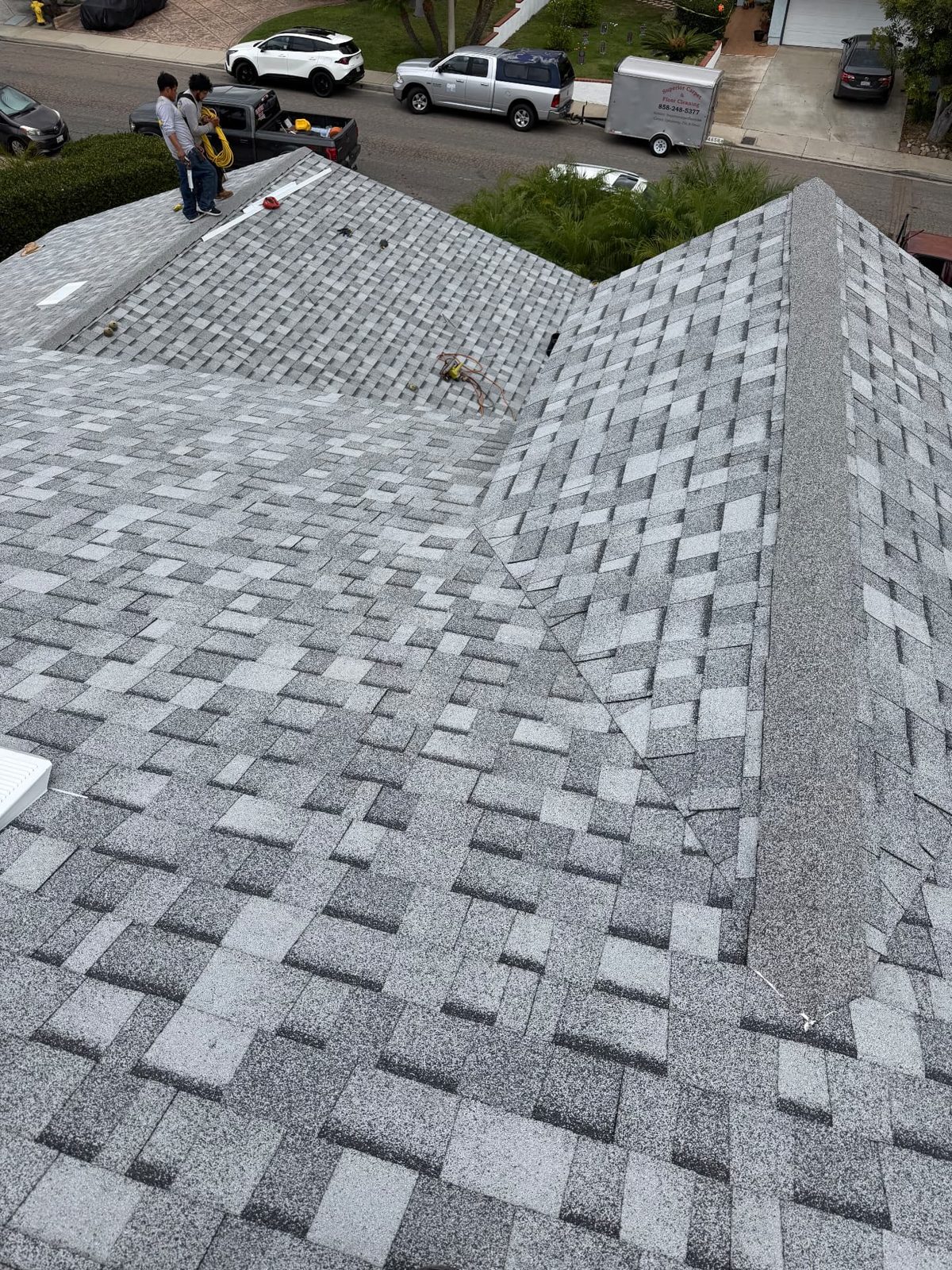
San Diego Roofing Trends in 2026: What Matters Before You Replace
San Diego roof replacement planning in 2026: energy-code checks, solar coordination, complete roof assemblies and real local project examples.
Read article
San Diego Cool Roofs in 2026: Questions Before a Reroof
How to check cool-roof product ratings and address-specific energy requirements before a San Diego reroof, without assuming every roof needs the same system.
Read articleReady for a Free Estimate?
Talk to a senior consultant today. On-site assessment, drone imagery, transparent pricing.