
San Diego is a deceptively hard climate for a roof. There is no snow load and very little rain, so homeowners assume any material will do. In practice three local forces decide which roofing systems last here and which ones fail early: marine salt air that corrodes fasteners and flashing, relentless year-round UV that bakes asphalt and dries out sealants, and Santa Ana winds that test every edge, ridge cap and fastener pattern on the roof.
Below is an honest, contractor's-eye comparison of the four systems we install most across San Diego County — architectural asphalt shingle, concrete and clay tile, standing-seam metal, and TPO single-ply — scored against those three forces, with 2026 installed pricing.
Quick verdict by home and location
- Within ~1 mile of saltwater (La Jolla, Pacific Beach, Mission Beach, Ocean Beach, Point Loma, Del Mar, Coronado, Imperial Beach): aluminum standing seam or concrete/clay tile — plus stainless or aluminum fasteners and flashing, non-negotiable.
- Inland wildfire zones (Poway, Ramona, Alpine, Escondido canyons, eastern Rancho Santa Fe): tile or metal over a fire-rated underlayment — Class-A assembly, no combustible surface for embers.
- Suburban tract and ranch homes (Clairemont, Mira Mesa, Santee, Chula Vista, Serra Mesa): architectural asphalt shingle is the best value per dollar when installed correctly.
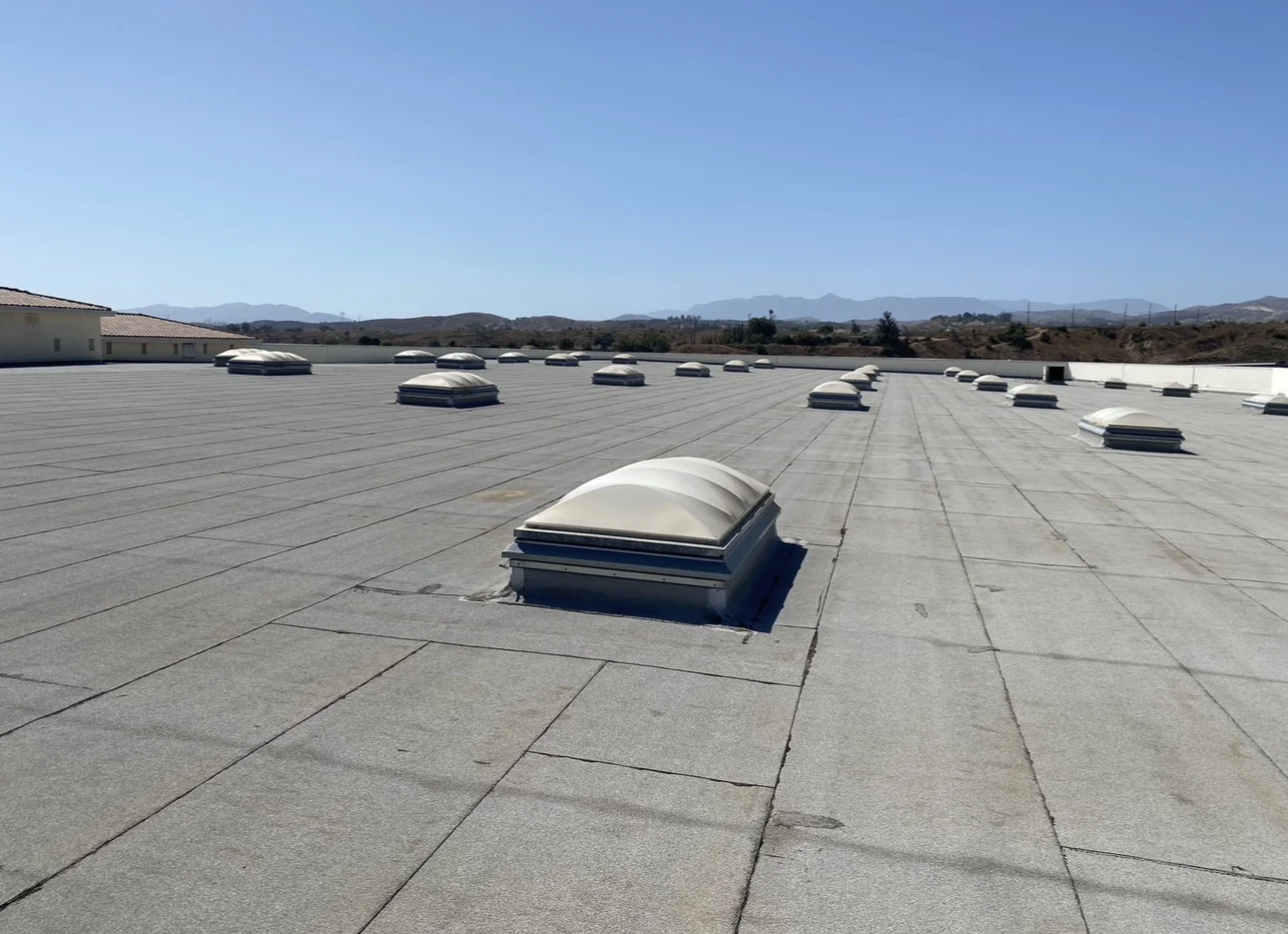
- Flat and low-slope roofs, ADUs, mid-century modern, commercial and multi-family: TPO (or PVC where grease and chemical exposure exist).
1. Architectural asphalt shingle
Installed cost (2026): $9–$14 per sq ft. Realistic San Diego lifespan: 22–28 years.
Salt air: the shingle itself is inert, but the roof's weak points are metal — valley flashing, drip edge, vent boots and nails. Within a mile of the coast, galvanized flashing rusts through in 8–12 years, which is why we specify stainless fasteners and aluminum or stainless flashing on every coastal shingle roof. That single upgrade is the difference between a 12-year roof and a 25-year roof.
UV: this is asphalt's real enemy in San Diego. Constant UV drives off the volatile oils in the asphalt mat, which is why you see granules in the gutters and curling edges. Light-colored, Title 24 cool-roof SKUs (GAF Timberline HDZ Reflector Series, Owens Corning cool-color) run cooler and measurably outlast dark shingles here.
Santa Ana winds: modern architectural shingles carry 130 mph wind ratings — but only with the manufacturer's 6-nail high-wind nailing pattern and properly sealed starter and hip/ridge courses. Nearly every shingle blow-off we repair after a Santa Ana event traces back to 4-nail installs, exposed nails, or a missing starter strip — installation, not material.
Best for: ranch, Craftsman and tract homes outside fire zones where upfront cost matters and 25 years of protection is the goal.
2. Concrete and clay tile
Installed cost (2026): concrete $15–$25 per sq ft; authentic clay $20–$40. Lifespan: concrete 50+ years, clay 75+ — with underlayment service every 25–35 years.
Salt air: the single most corrosion-immune material we install. Fired clay and concrete simply do not care about marine air. The failure point is always beneath the tile — battens, fasteners and underlayment — so coastal tile roofs get stainless fasteners and a high-temp synthetic or SBS-modified underlayment.
UV: excellent. Color is through-body or kiln-fired rather than a surface coating, so fading is minimal over decades. The air gap under tile also drops attic temperatures 10–20°F versus a direct-nailed shingle roof, which is a real cooling-bill difference inland.
Santa Ana winds: field tile is heavy and very wind-stable. Losses almost always occur at hip and ridge caps that were mortar- or foam-bedded 20+ years ago and have since loosened. A pre-season inspection and re-bedding of loose caps prevents the overwhelming majority of Santa Ana tile damage.
Structure: tile weighs 900–1,200 lbs per square versus 250–400 for shingle. Converting a shingle-framed home to tile requires an engineer's letter and usually framing reinforcement — we include that evaluation in every conversion estimate.
Best for: Spanish Colonial, Mediterranean and Mission-style homes, fire zones, and any owner optimizing lifetime cost rather than day-one cost. If your home is already tile, a lift and relay resets the waterproofing clock at 50–65% of full replacement.
3. Standing-seam metal
Installed cost (2026): 24-gauge Galvalume $18–$26 per sq ft; aluminum (coastal) $22–$30; copper or zinc $30–$55. Lifespan: 40–60 years.
Salt air: this is where material choice matters most in San Diego, and where most out-of-town bids get it wrong. Galvalume steel is excellent inland but should not be used within roughly a mile of surf — chloride exposure attacks cut edges and any coating scratch. Aluminum standing seam with a Kynar 500 (PVDF) finish is the correct coastal specification, paired with stainless clips and aluminum trim. Never mix dissimilar metals: a steel fastener through an aluminum panel in marine air creates galvanic corrosion and a leak within a few years.
UV: Kynar 500 finishes hold color for 30+ years and carry high solar reflectance, so light-color metal easily satisfies Title 24 cool-roof requirements and often qualifies for cool-roof credit.
Santa Ana winds: the strongest performer of the four. Concealed-fastener standing seam clips into the deck with no exposed screws or lifted edges for wind to grab; tested uplift ratings commonly exceed 150 mph. Avoid exposed-fastener corrugated or R-panel on homes — the neoprene washers dry out in 12–15 years under San Diego UV and become the leak path.
Best for: coastal homes, wildfire zones, modern architecture, and owners who want to buy one roof and never buy another. Weighing 1–1.5 lbs per sq ft, metal needs no framing upgrade when converting from shingle.
4. TPO single-ply (flat and low-slope)
Installed cost (2026): $8–$14 per sq ft. Lifespan: 20–25 years (60-mil), longer with 80-mil membrane.
Salt air: the membrane is chemically inert and unaffected by marine air. Corrosion risk lives in the termination bars, drains, scuppers and edge metal — stainless or aluminum only near the coast.
UV: white TPO is the most reflective system we install, with an SRI well above Title 24 minimums. It routinely cuts rooftop surface temperature by 50–70°F versus a dark modified-bitumen or torch-down roof, which is why it dominates San Diego commercial and multi-family re-roofs. Insist on 60-mil minimum — thin 45-mil membrane chalks and crazes early under this much sun.
Santa Ana winds: performance depends entirely on the attachment method and perimeter detailing. Mechanically fastened systems with properly engineered perimeter and corner fastening rows handle high uplift well; a fully adhered system over a rigid-insulation base performs even better. Sloppy edge metal is the number one cause of flat-roof wind peel in San Diego.
Best for: flat and low-slope residential sections, ADUs, apartment buildings, and commercial and multi-family properties, including 150+ unit portfolio rollouts.
Side-by-side summary
- Longest life: clay tile (75+ yrs) > concrete tile / metal (50+) > shingle (25) ≈ TPO (20–25).
- Best salt-air resistance: tile ≈ aluminum standing seam > TPO > shingle.
- Best Santa Ana wind performance: standing-seam metal > tile (with sound caps) > shingle (6-nail) > TPO (attachment-dependent).
- Best UV / cooling performance: white TPO > light Kynar metal > tile (air gap) > cool-rated shingle.
- Lowest upfront cost: TPO ≈ shingle < tile < metal.
- Lowest lifetime cost per year: tile ≈ metal < shingle ≈ TPO.
The detail that matters more than the material
After thousands of San Diego roofs, the pattern is consistent: premature failures are almost never caused by the material choice. They are caused by galvanized flashing on a coastal home, 4-nail shingle patterns, felt instead of synthetic underlayment, mixed metals, unsealed ridge caps, and missing eave and ridge ventilation. Choose the right material for your microclimate — then make sure the assembly beneath it is specified for salt air and wind.
California First Roofing is licensed (CSLB #1094851) and factory-certified across shingle, tile, metal and single-ply systems. Every estimate includes a drone survey, decking assessment, and a fixed-price, line-item proposal that spells out underlayment, flashing and fastener metallurgy. Call (424) 777-1619 or email sales@californiafirstroofing.com, or book a free roof inspection.
Frequently Asked Questions
What is the best roofing material for San Diego homes?
It depends on your microclimate. Within a mile of the coast, aluminum standing-seam metal or concrete/clay tile resist salt air best. In inland fire zones, tile or metal over fire-rated underlayment. For tract and ranch homes, architectural shingle is the best value.
Which roofing material holds up best in coastal salt air?
Tile and aluminum standing seam. Both are essentially immune to chloride corrosion. The real failure point near the coast is metal hardware, so stainless or aluminum flashing and fasteners are required regardless of which material you choose.
What roof handles Santa Ana winds best?
Standing-seam metal. Concealed clips leave no exposed fasteners or lifted edges for wind uplift, with tested ratings above 150 mph. Tile is next, provided hip and ridge caps are properly bedded, followed by architectural shingle installed with a 6-nail high-wind pattern.
How much do roofing materials cost per square foot in San Diego in 2026?
Architectural shingle $9–$14, TPO single-ply $8–$14, concrete tile $15–$25, standing-seam metal $18–$30, clay tile $20–$40, and slate $30–$60 per sq ft installed, including tear-off, underlayment, and permit.
Is TPO a good choice for a San Diego flat roof?
Yes. White TPO is the most reflective system available, easily meets Title 24, and cuts rooftop temperatures 50–70°F versus torch-down. Specify 60-mil minimum membrane and engineered perimeter fastening so Santa Ana uplift cannot peel the edge.
Should I use steel or aluminum metal roofing near the beach?
Aluminum with a Kynar 500 finish. Galvalume steel performs well inland but corrodes at cut edges and coating scratches within a mile of surf. Never mix metals — steel fasteners in aluminum panels cause galvanic corrosion and leaks.
Related guides for San Diego
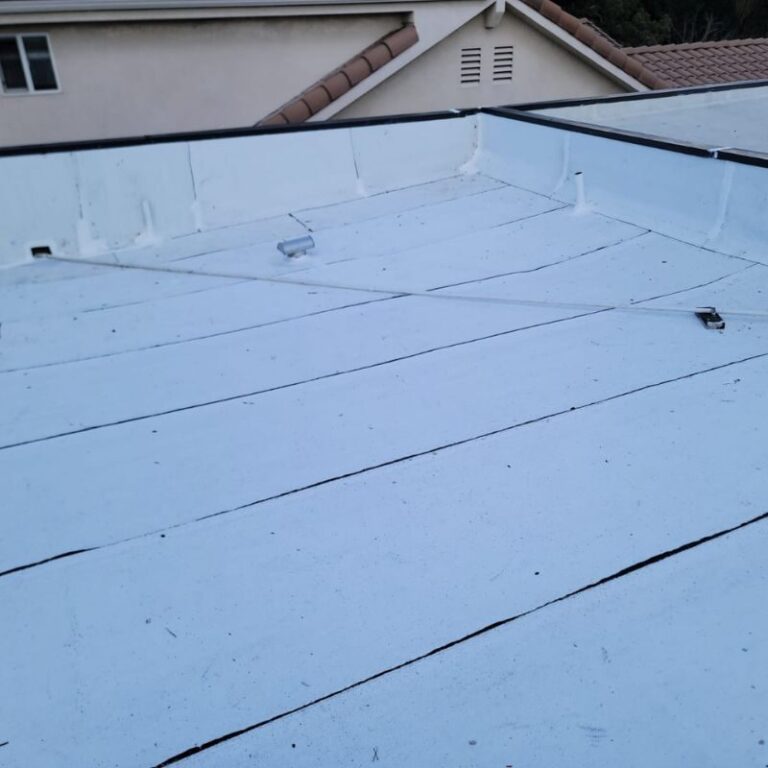
California Cool-Roof Rebates & Title 24 Explained (2026)
How Title 24 compliance and California utility rebates can offset thousands on a new roof — what qualifies as a cool roof, how much you get back, and how to claim it in San Diego.
Read article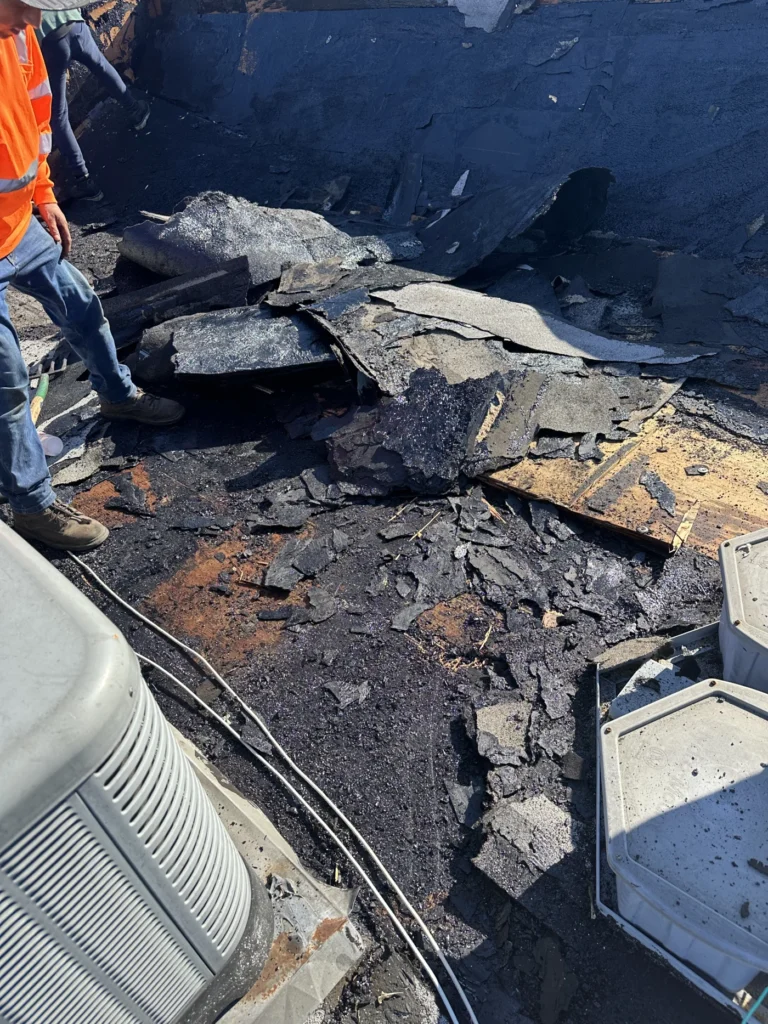
8 Signs You Need a New Roof (San Diego Homeowner's Guide)
How to tell if your San Diego roof needs replacement or just repair — the eight warning signs every homeowner should know before the next storm.
Read article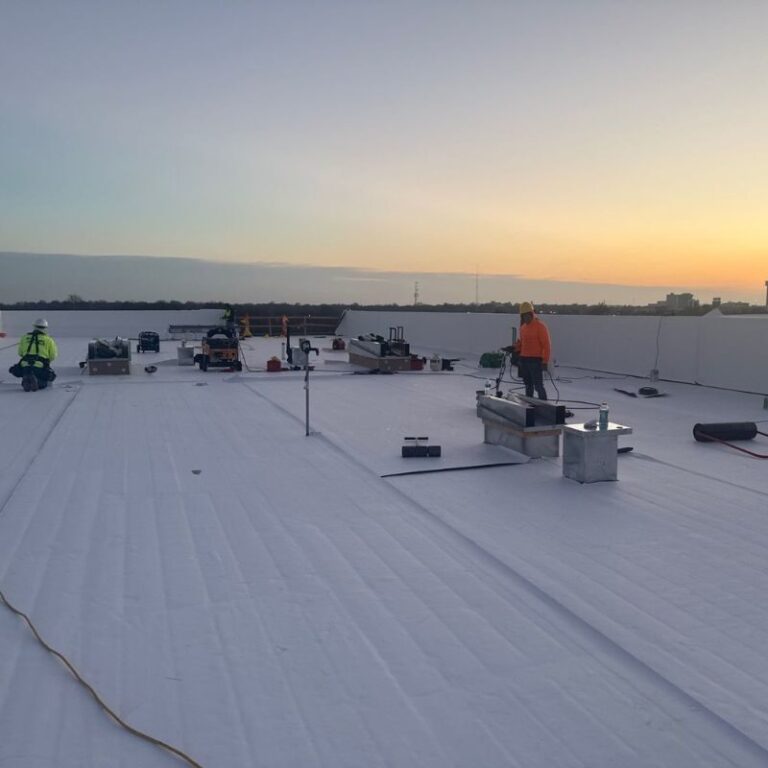
TPO Roofing for San Diego Commercial Buildings: The Complete Guide
Why TPO dominates flat-roof commercial work in Southern California — energy performance, warranty realities, thickness grades, and what to look for in a TPO installer.
Read articleReady for a Free Estimate?
Talk to a senior consultant today. On-site assessment, drone imagery, transparent pricing.